




Digitalization of TV signal in Bosna and Herzegovina to be completed by the end of the year, but not in all parts of the country
Digitalization of TV signal in Bosna and Herzegovina to be completed by the end of the year, but not in all parts of the country
The finalisation of the long-term project will bring benefits for citizens, public broadcasters and the entire broadcasting industry.
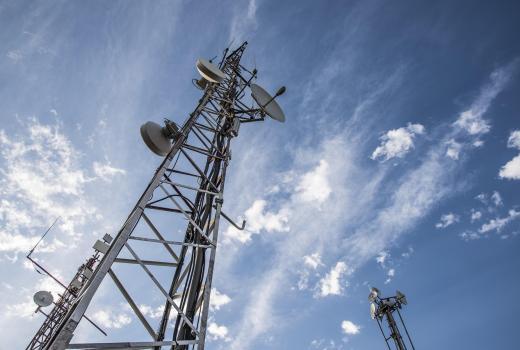
photo: Pixabay / Illustration
For a long time, Bosnia and Herzegovina was the only country in Europe without digital terrestrial TV broadcasting. Even today, digitalization still has not been fully implemented across the entire territory of the state. The digitalization project, which began with concrete activities in 2009, has passed through various phases burdened by political, procedural, technical, and administrative obstacles that caused multiple delays of the planned deadlines. The authorities at the state level are confident that digitalization will be finalized by the end of the current year as planned and announced, although not every municipality will be covered by the digital signal, which currently includes only the programs of the three public broadcasters.
Everything took many years
With the launch of terrestrial digital broadcasting in Bosna and Herzegovina in the regions of Sarajevo, Mostar and Banja Luka (on July 1), and the region of Zenica (on October 7) in the DVB-T2/MPEG-4 standard, Bosna and Herzegovina is close to finalizing a long-term project that brings benefits both for citizens and for public services, as well as the entire broadcasting industry.
Although the project is in the final phase, potential challenges are expected to affect the timeline of the completion of the digitization process in the coming period. According to the Ministry of Communications and Transport of Bosna and Herzegovina (Ministry), a majority of difficulties are still related to the condition of the infrastructure of public broadcasting services, as well as unresolved ownership relations. Although they expect a major part of the system to be assembled and put into operation – significantly expanding the coverage of the DVB-T2 signal – they emphasize that there are ten facilities, including six ITC centers, where, due to the lack of infrastructure conditions or unresolved ownership relations, it will not be possible to complete the installation of the equipment within the anticipated deadline. As a result, certain municipalities in Bosna and Herzegovina will still not be covered by a digital signal until the end of the year.
As the project implementation continues, the Ministry, which is leading the Digitalization Project, currently does not have quantitative data on the total digital signal coverage in entities and the Brčko District. The Ministry confirmed to Media.ba that high-power transmitters, along with associated low-power transmitters (so-called gap fillers), have been installed in almost all of the nine digital SFN (Single Frequency Network) regions. They emphasized that the current number of active transmitters, which are being successively put into operation following the testing and technical inspection, cannot be used as a relevant indicator of the total digital signal coverage, since individual transmitters have different power and coverage range, but also added that signal coverage is progressively increasing with each new transmitter.
Test broadcasting still in effect
Currently, the Multiplex A (MUX A) broadcasts only the programs of the three public RTV services in Bosna and Herzegovina because it is still in the testing phase of broadcast carried out in line with the rules of the Communications Regulatory Agency of Bosna and Herzegovina (CRA). The purpose is technical verification and stabilization of the network. To access the digital signals of BHRT, FTV and RTRS, citizens only need a TV device that supports DVB-T2 reception, which has been the market’s standard since 2015. In the case of older TV devices, an external digital receiver, or a so-called Set-top-box, is required.
The list of channels available through this network is expected to be expanded. When the public broadcasting services receive licenses to manage the MUX A network after the completion of the project, they will be required – in accordance with CRA rules – to allow commercial TVs to join Multiplex A. Despite the announcements in previous years of possible subsidies for houses to purchase receivers for digital signals, no formal plan for such benefits for citizens has yet been adopted.
To date, a total of 36.596.557 convertible marks has been spent on the Project, out of the 36.934.000 convertible marks provided by the Decision of the Council of Ministers of Bosna and Herzegovina from 2011, which included the Digitization Project in the multi-year capital investment program. This funding came partly from the state budget, namely from the fees of licenses for Universal Mobile Telecommunications Systems (UMTS licenses), and partly from surplus CRA revenues. A total of 6.657.300 convertible marks was spent on the implementation of part of the first phase (First A and First B Phase), while 29.939.257 convertible marks were spent on implementing the second and third phases, as well as on upgrading of the first phase, since it was based on DVB-T standard. Additional costs are possible if, after the launch of the complete network, it is determined that there are areas that need to be additionally covered by a signal with low-power transmitters, the Ministry announced.
Digitization of broadcasting brings numerous benefits for both citizens and broadcasters. The complete transition to digital system ensures free distribution of high-quality TV signals across the entire country, improving media infrastructure and significantly enhancing viewer's experience. Viewers get a more stable and cleaner image, while broadcasters achieve more efficient and cost-effective transmission using the smaller portion of frequency spectrum. This also creates the technical prerequisites for freeing part of the 700 MHz band, which is crucial for the development of mobile communications. The modern DVB-T2 system, which is more resistant to interference and has more capacity than the earlier DVB-T standard, enables significantly better signal quality and introduces the possibility of new functionalities such as electronic program guide (EPG), multi-channel sound, interactive services, coding and PayTV, as well as the further expansion of HD television.
A long process burdened by numerous problems
The institutions of Bosna and Herzegovina assumed obligations in terms of digitalization all the way back in 2006, when the country signed an international agreement on the transition to a digital signal, which was ratified in 2007.
Activities aiming for the transition to digital began in 2009, when CRA established an expert forum that produced the “Strategy for transition from analog to digital terrestrial broadcasting”. The document, adopted by the Council of Ministers, set a deadline for the transition by the end of 2011, an ambitious timeline one year ahead of the EU’s deadline for its member states.
In July 2010, following the proposal of the Ministry, the Council of Ministers adopted the Project of Digitization of Microwave Links of Public Radio and Television Services of Bosnia and Herzegovina assigning the project implementation to public broadcasters, defining CRA’s responsibilities, and establishing an Expert Group to monitor progress.
Although the funds had been secured, the deadline has since been missed several times already due to numerous technical, procedural, and political problems. For years, European Commission progress reports on Bosnia and Herzegovina consistently highlighted the lack of progress under Chapter 10, relating to digital transformation and media.
Insufficient institutional capacity of the public broadcasting system
According to the Ministry, the biggest and most persistent challenge has been the insufficient institutional capacity of the public broadcasting system. The Public Broadcasting Service Corporation, which was supposed to manage the digitization process on behalf of the public services, was never established.
"The absence of this key institutional mechanism significantly slowed down decision-making, technical preparation and operational implementation of the entire process", the Ministry argued and pointed out that the joint decision-making, important for the process to be conducted in accordance with the defined dynamics, was further hampered by the damaged relations between the public broadcasting services. The Ministry also reminds of the importance of establishing the Corporation which, according to the law and strategic documents, should be the entity in charge of managing joint public services infrastructure, including the digital network, an entity that is a kind of "digital infrastructure network operator".
Procurement procedures are another key cause for delays in the project implementation. At the beginning of 2011, after years of delays, the Ministry announced a call for proposals for the implementation of the first phase of digitization. Due to a submitted and upheld complaint, the tender was annulled and reissued in early 2012, only to be annulled again.
The deadline set by the International Telecommunication Union (ITU) and the United Nations (UN) – June 15, 2015 – as the final switch-off date for analogue broadcasting – was also missing. Although the plan was for the three public broadcasters in Bosna and Herzegovina to begin delivering digital signals on September 29, 2016, the start was again postponed. Back then, RTRS requested to extend the deadline to mid-October, citing – according to the representatives of the three public broadcasters and the Ministry – technical and procedural reasons.
Analogue signal shut down, citizens left without alternative
The first phase of the Digitalisation Project in Bosna and Herzegovina began in 2014 under Minister Damir Hadžić, and concluded with the launch of the DVB-T test signal in October 2016 in the digital areas of Sarajevo, Banja Luka and Mostar (out of a total nine regions in Bosna and Herzegovina), for a 90-day period, marking what officials described as the beginning of the country’s “digital era”. At that time, Minister Ismir Jusko announced that the entire territory of Bosna and Herzegovina would be covered by a digital signal within the following year and hinted at possible subsidies for household digital receivers, similar to how it was done in neighboring countries. It was then that the transition to the newer DVB-T2 standard was announced as well.
The analog signal was switched off on January 1, 2022, after CRA ordered the shutdown of more than 160 transmitters of public services and other TV stations, due to the interference with the 5G network in Croatia. Many citizens without cable TV subscriptions, including the returnee population, were left without picture and sound, and authorities offered no alternative solution. In September 2023, media reported that nearly 60% of the citizens of Bosna and Herzegovina do not have access to any cable system, and the analog switch-off left them without terrestrial TV signal.
A tender for the second digitization phase was issued in 2017 but soon annulled because no offer met the required specifications. In September 2021, the media reported that the Ministry, as the project’s lead, could not initiate procurement for the remaining equipment without the agreed equipment specification prepared by public broadcasting services, which has not yet been completed.
The story continued only in 2022 with the issuance of a tender for purchase of equipment for digital transmission and broadcasting of public broadcasting services in Bosna and Herzegovina, which was amended seven times, and additionally complicated by appeals. The contract worth 25,8 million KM without VAT was signed at the beginning of 2024, but soon the contracted arrangement had to be changed for political reasons. In June, the US imposed sanctions on Sirius 2010, one of two companies in the winning consortium, citing its links with the then president of the entity Republika Srpska. In order to ensure the uninterrupted project implementation, all service obligations were transferred to the other company from the consortium, Odasiljači i veze from Croatia, through an annex signed in August.
Other factors contributing to delays include the complex and lengthy procedures for adopting individual projects and financing decisions, the switch from DVB-T to DVB-T2, which required revising strategic documents and projects, and the Council of Ministers’ decision on ownership of the equipment procured in the first phase of the Project.
The company Odašiljači i veze also carried out the first phase of radio and TV digitalization in Bosna and Herzegovina ten years ago. The same company was also responsible for digitalization in Croatia, which completely switched off analog broadcasting in 2010 and adopted the DVB-T standard. Digital broadcasting in Croatia began gradually in 2002, and the transition to the DVB-T2 standard was fully completed at the end of 2020.
In Serbia, the analog switch-off in the entire country occurred by May 1, 2015, completing the digitization process. Soon after Serbia, Montenegro also fully transitioned to digital broadcasting on June 17, 2015, when the analog signal was ceremonially switched off.