




'I am from America / Take me to Bosnia!'

'I am from America / Take me to Bosnia!'
What is happening in the United States is a miracle that brings tears of joy to my eyes, and that hasn’t happened often over the past 35 years writing about Bosnia, writes Ed Vulliamy
photo: Slađan Tomić
This week football became, yet again, Bosnia’s way of turning nightmares into beautiful dreams. Potentially, this time, dreams that come true. What is happening in the United States is a miracle that brings tears of joy to my eyes, and that hasn’t happened often over the past 35 years writing about Bosnia.
The time has come not to weep but to whoop! with pride and joy. The time has come when everyone across the planet knows exactly who we are – at last, and about time too.
What is happening in America is not just about the affirmation of Bosnia – our team, and our fans – which it is. It is not just about how Bosnia and Bosnians have rescued football from its worst – violence and money – to affirm football at its crazy, very best.
It is about how and why a young and brilliant Bosnian team, and the sheer good-natured but partisan effervescence of its fans has captured the hearts of America and Canada, the host nations; every American friend I have – scores of them – have fallen in love with Bosnia and Bosnians. I’ve spoken to others watching on from Mexico, wishing they could get a visit from all those who have made the effort to be there, whether it be from the homeland or its third largest city, St. Louis, Missouri, or around the diaspora.
The diaspora that has been shattered and scattered around the world by violence, getting on with it quietly, never forgetting, but doing what has to be done day-to-day, working hard to pay the bills, cover the mortgage or rent, feed the kids. The immigrant story of hard graft.
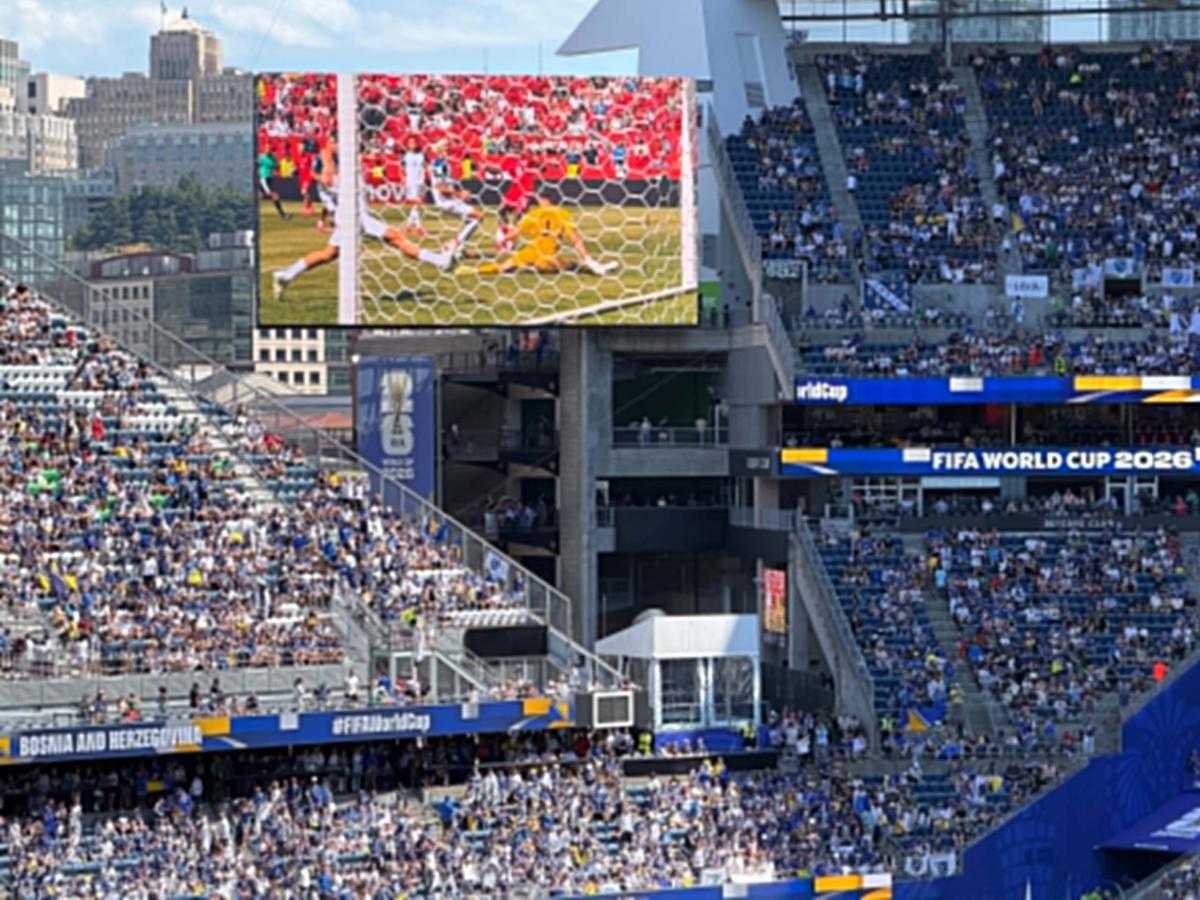
A worldwide community, all but forgotten until now: Bosnia is suddenly everyone’s favourite country. Thanks to the Barbarez Boys, the Zmajevi; thanks to the icon and team leader formidable Edin Džeko; thanks to every one of those 26 players, some of them barely out of school. Thanks to everyone in the stadium and in front of big screens around the country. And thanks to a silly song about going to America, now adapted: a friend tells me that at a bar in Las Vegas, the regulars are singing: I am from America / Take me to Bosnia!
‘The pitch is the place where Bosnia really happens’
Fourteen years ago, I wrote the most-read article I have ever written in my excuse for a career that has in large part been steered by Bosnia, for better and worse. Retweeted by Edin Džeko and then “re-retweeted” (?!) by the face of British soccer Gary Lineker, it was about the team that qualified for the World Cup in Brazil, a eulogy to Džeko as national idol, but more than that.
It was about how the actual football pitch was the only functioning multi-ethnic organism in the country. As I put it, for all the farce of Bosnian politics – even that of the football federation: “There can be no ethnic veto against a pass out of defence from Croat Toni Šunjić to Bosnian Serb captain and midfielder Zvjezdan Misimović, to superstar striker Džeko, a Muslim. Srebrenica survivor Asmir Selimović puts it well: ‘The pitch is the place where Bosnia really happens. It is the one glimmer of hope to show who we really are. You can't take all that crap onto a soccer field. For us.’ he says, ‘the team is Bosnia. It's how Bosnia should be all three peoples together’.”
And it was about something else. About how much this means, given the terrible history we all know and share. To recap on that article: “Bosnian striker Vedad Ibišević, grew up as a refugee in St Louis. He plays club football for Stuttgart and scored the goal for Bosnia against Lithuania that took the country through to the World Cup finals. "I was little, but not that little," he says of the war. Ibišević is from Vlasenica – like Selimović, with whom he played in St Louis – and was forced to flee his hometown in 1992. ‘I saw many, many horrible things,’ he recalls after training in Zenica. His father and uncle were killed, his parents’ village razed. Ibišević was among the lucky ones who secured a place on a bus to Tuzla in Bosnian republic-controlled territory, made to walk the last of the journey on foot, past corpses strewn along the road. ‘People from other countries, they don't understand,’ he continues. ‘To them, it's just another soccer game and the goal I scored is just a goal. But it's not just a goal. I think the people who know me and know my family members, they have the same feeling: It's not just a goal. It's much more than that. It's the whole story’.”
We all know it’s the ‘whole story’. And it is again, except that this time, we are a generation on. Take Kerim Alajbegović, who scored against Qatar after putting that penalty, cool as cucumber, past the best goalkeeper in the world, Italy’s Gianluigi Donnarumma, to put us where we are now. He was not yet born when I first saw Edin Džeko play and score for Bosnia, in the Koševo stadium on a steaming summer night against Turkey in 2007.
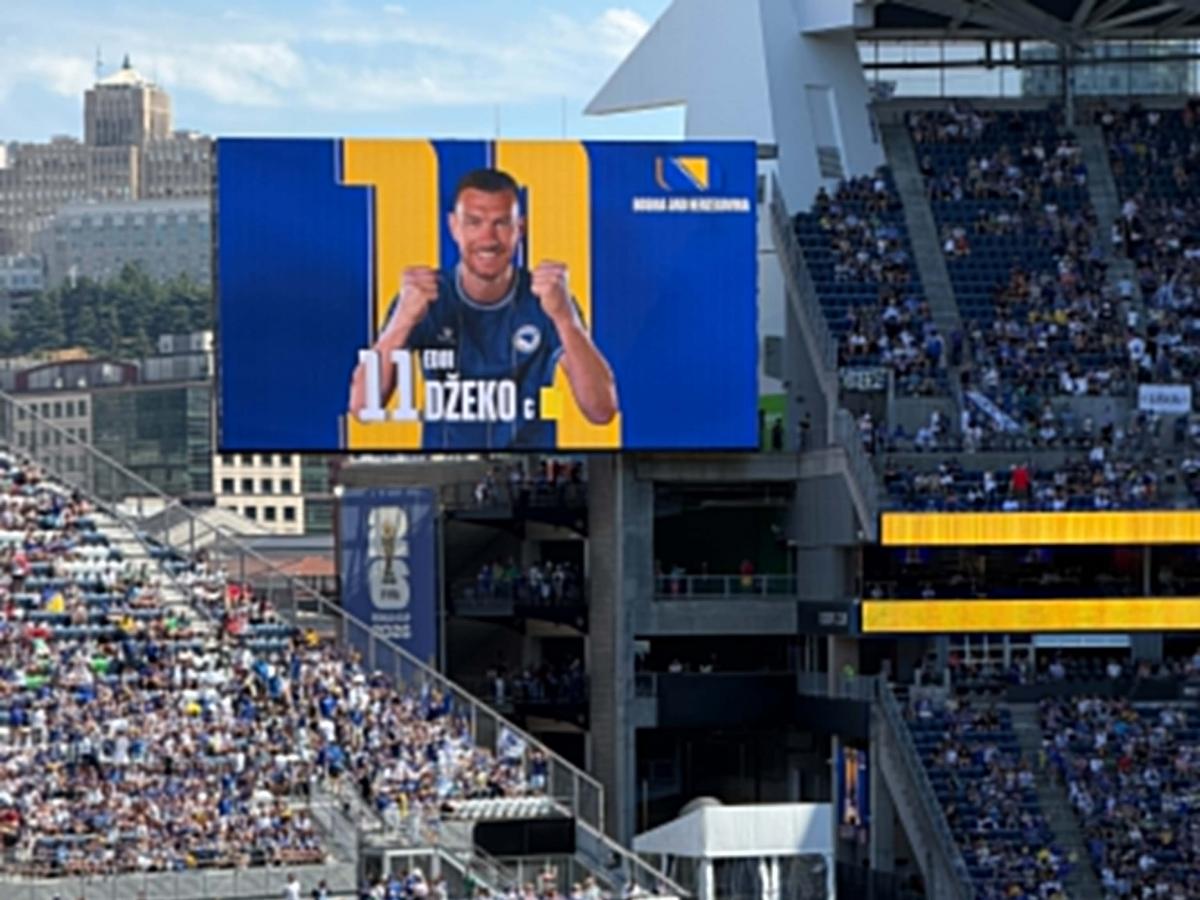
I cannot write the same story twice, and I pleaded across the board with students of journalism and others to write a kind of ‘part two’, a sequel. Interview Barbarez, Alajbegović and the ‘Milwaukee Messi’ Esmir Bajrakterević. Just imagine: Ibišević was a survivor of the massacre of his family in Vlasenica. Fabulous Bajraktarević is the son of a mother who escaped the Srebrenica massacre. An all-American kid in the loveliest sense, born in Wisconsin - but he plays for the homeland. Like Džeko, who turned down Czech and German offers to play for them, Bajraktarević made a choice to represent Bosnia rather than his country of birth – a choice between affiliations. As he explains, in the all-American accent he grew up speaking: “It’s where my parents were born … It’s a small country, so it’s like a family. It’s the best feeling.”
Yes, Esmir: “it’s the whole story”, a story that unfolded before you were born: the worst massacre on European soil since the Third Reich, and which your mother – bless her – escaped in order to bear you in the country whose team you now face in the World Cup. Little would she have known, when fleeing that hell …
But I guess journalists just don’t think like that anymore. There was no sequel that I am aware of, so here I am trying to write one, at a frustrating distance from it all.
The team is more Bosnian than Bosnia is
Asmir Selimović’s point about the pitch is as true now as it was then. There we are, with Milomir Dodik refusing to support the national team and urging others not to; but who scores the first goal of the campaign, against Canada? Jovo Lukić, a Serb. Who is the enlightenment in that equation, and who the retard? The gallant young forward for Universitatea Cluj FC in Romania, or the pathetic but powerful sectarian politician?
There we are, the ridiculous mayor of Vitez insisting that there be no public big screening of Bosnia’s games, to which his fellow Bosnian Croat co-citizen responds online to say that he has a good screen and plenty of space in his garden for anyone wanting to come over and cheer the boys, including ace defender Nikola Katić, a Croat. Coach and football legend Sergej Barabarez has a Bosnian Serb father and a half-Croat, half Bosniak mother. The perfect leader for a beautifully cohesive Bosnian team.
As in 2014, after the farcically sectarian federation had to be reformed in order for Bosnia to be readmitted to UEFA and FIFA, the team is – as Selimović said – more Bosnian than Bosnia is. It humiliates the sectarians on all sides.
Ahmed Burić, Bosnia’s most celebrated punk-poet-musician, is fitting in a David Byrne concert at Pula between games, on the way to which he reflects: “I never thought I would say that the football team is the better part of society, but now it is definitely so. In a world without meaning, that means a lot. Maybe even more than we realise now”.
Burić makes an astute point about the love of homeland for essentially a diaspora team: “These children are the sons of refugees who have made their way through the difficult lives of the first generation of immigrants. Their self-confidence is not dented by the corruption and clientelism that reign in their homeland, which they love in an abstract way. And this is reflected on the football field”.
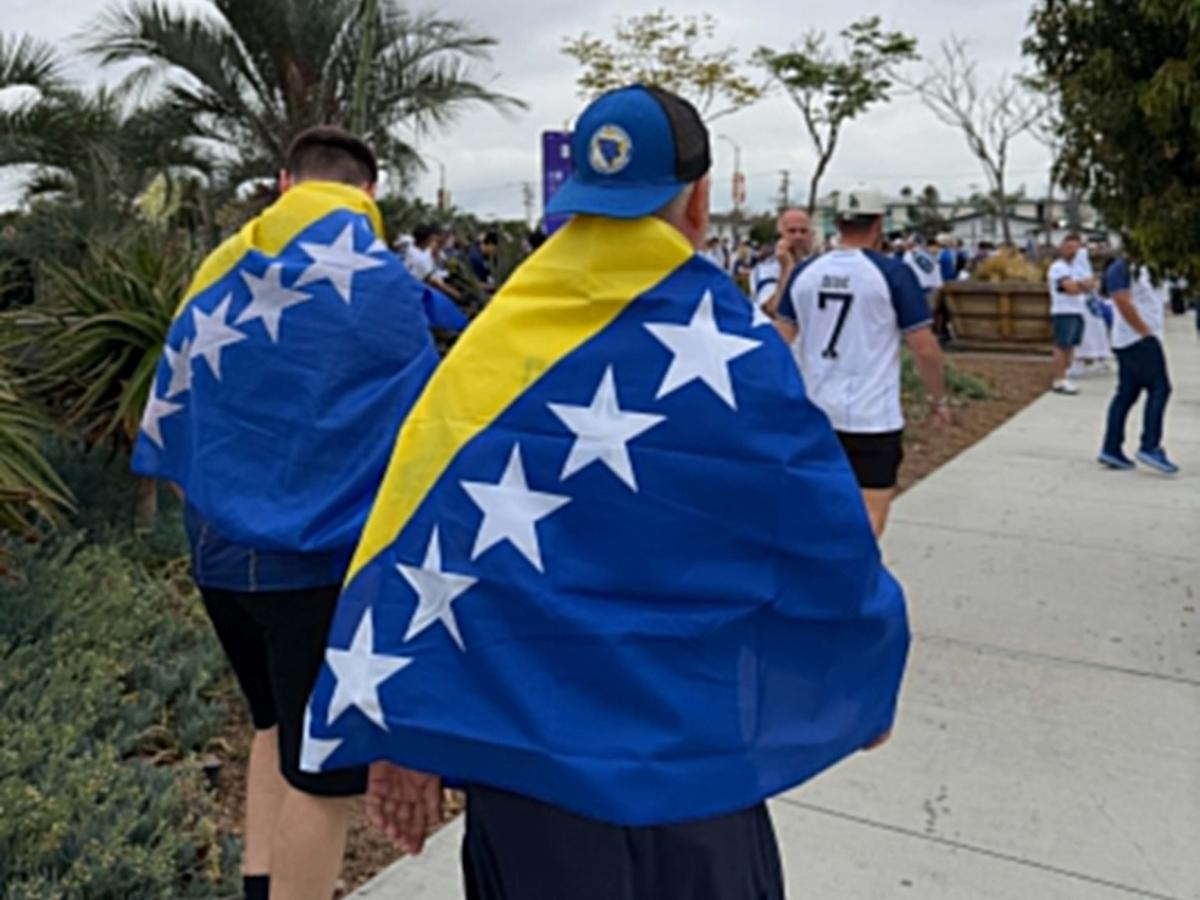
What it must be like to be there. Among those following the team is the niece of Safet Isović, father of sevdalinka, Mubina van Veen-Isović, not so much a connoisseuse of the game as just, well: part of Bosnia’s heritage and former honorary consul for BiH to Luxembourg. “Already, upon arrival in Toronto and Los Angeles”, she enthuses, “and especially in Seattle, there was an emotional charge on the streets and in the air, which only intensified as the game approached.
“This charge then infused those who were just watching us, a sense of community and friendship not only among BH fans but also with the Americans and many other nationalities. All these emotions exploded like a volcano after victory over Qatar. People cried with happiness – and reborn hope for a better tomorrow, right here, before our eyes”.
‘For them, there is a lightness of being we don’t have’
Damir Šagolj, Pulitzer prize-winning photographer and football fanatic, is collecting his first set of Panini cards with son Leon, busy preparing for this year’s festival of WARM – War, Art, Reporting, Memory, but finds it incongruous having to focus on wars past and present with such jubilation all around him in Sarajevo. “The whole thing has brought this pretty fucking crazily joyous energy to a society that is otherwise running on empty. I went into a municipal building, to see to some business. Usually everyone in there is miserable and grumpy; there’s a lady there who makes you groan when you awake if you have to see her that day. But now everyone is wearing a shirt of this player or that, everyone is in a fantastic mood, friendly and happy. They’re mostly quite chubby and wearing shirts that are a little too tight, so the whole thing is funny – and fun”.
Šagolj sees “a big difference in these being the grandchildren of the war, not the children”, mostly born in the diaspora. “For us, the wounds are still open. For them, there is a lightness of being we don’t have. They are less burdened by it all, they can all hug the Serbs, and all hug each other because they are just part of a beautiful team. Yes, this is Džeko’s last dance, but we are watching these wonderful 18-year-olds; so it is also about the future, and that’s the beauty of it”.
Bosnia is a small country, a village really – and one of the worst aspects of the genocide was its macabre intimacy: people knew those who were torturing, raping and killing them. The Zmajevi at the World Cup turn that intimacy on its head, they defy it, turn it upside down, into something joyful and affirmative. Bosnia is a country that sends its team to the World Cup, but only close friends know the players – well, their grandparents – from school!
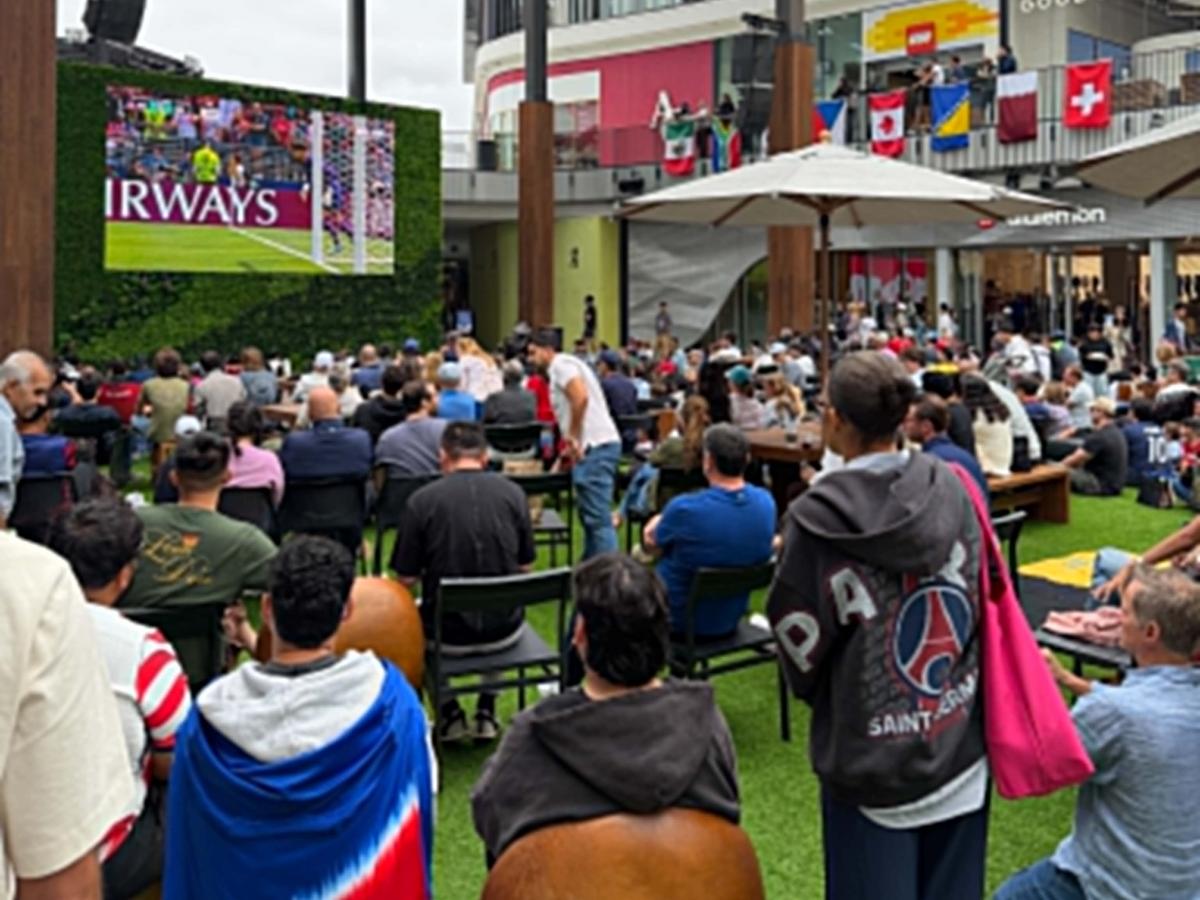
People back in Bosnia for summer are connecting in two directions: across the wide ocean to America via big screen and TV, and with their own heritage and community. A beloved friend of mine called Rejhana Hadžić is back in Kakanj to watch, and sent the following, magnificent text message before the game against Qatar, regarding the efficacious midfielder Ivan Šunjić:
“I’m not sure if I ever told you, but Šunjić is from Kakanj. His grandfather was my maths teacher, and his uncle Jakša one of my closest friends. Jakša lived in London but sadly passed away; he knew football like an encyclopaedia. We used to sit together and watch football; he knew every stat, every game. Just think how proud he would be now. I know he’d be in America, cheering Šunjić on. It’s just a reminder of how strong Kakanj is.”
It sure is, and no doubt cyberspace is likewise buzzing with similar texts from people who remember a single mother from Mauritania called Fatimata Dembélé bringing up her son as an immigrant the frayed outskirts of Vernon in northeastern France. Rightly so, but I don’t know them; I do, however, know someone who was taught mathematics by Ivan Šunjić’s grandfather! What kind of claim to fame is that?!
There’s more: “Šunjić’s grandfather and his wife were originally from Montenegro, but they made their life in Kakanj, where their children Aleksandra (Šunjić’s mother) and Jakša were born. Šunjić’s father, on the other hand, is a Bosnian Croat from Kraljeva Sutjeska, one of Bosnia’s most historic places, closely connected to the Bosnian kings and Queen Katarina. All these different roots come together in one family, then in one player representing Bosnia. That’s what makes the story so special”.
‘When you watch football, you forget politics’
When I went into the Omarska death camp on 5 August 1992 – the day that changed my life and made me irrevocably ‘Bosnian’ – only one person spoke to the ITN cameras I accompanied, sitting, visibly terrified, with his watery bean soup. “I do not want to tell any lies, but I cannot tell the truth”, he said. I often wondered whether the remark had saved or cost him his life, until a solidarity meeting organised by Paddy Ashdown in 2008. In walked a face I recognised: I nearly fell off my chair.
Džemal Paratušić lives with his family in Borehamwood, and his daughter Aldijana “has just got off the plane back from Los Angeles and Seattle. She’s sleeping, but I just can’t wait to ask her all about it”, says Džemal. “When you watch football, you forget politics. We’re just so proud of our young team; the World Cup has united Bosnia: children, adults, everybody. For a little while, football brings together Bosniaks, Croats, Serbs and everyone born in our beautiful homeland, as well as the new generations of Bosnians born around the world. It unites those who remain and those forced to leave because of the war… Yes, this is connected to the war: I was one who had to flee my country and rebuild my life in the United Kingdom. But like so many others, I never stopped carrying Bosnia in my heart”. Džemal doesn’t like the word ‘diaspora’ – he prefers ‘exiles’. “Now we are all praying for the same thing:”, he continues: “a good result, but we are always with them, win or lose.
“The World Cup is especially emotional for me”, he adds, “because my daughter was there, proudly supporting the Bosnian team. Seeing the next generation embrace their heritage with such pride fills my heart with joy and reminds me that our love for Bosnia lives on through our children.”
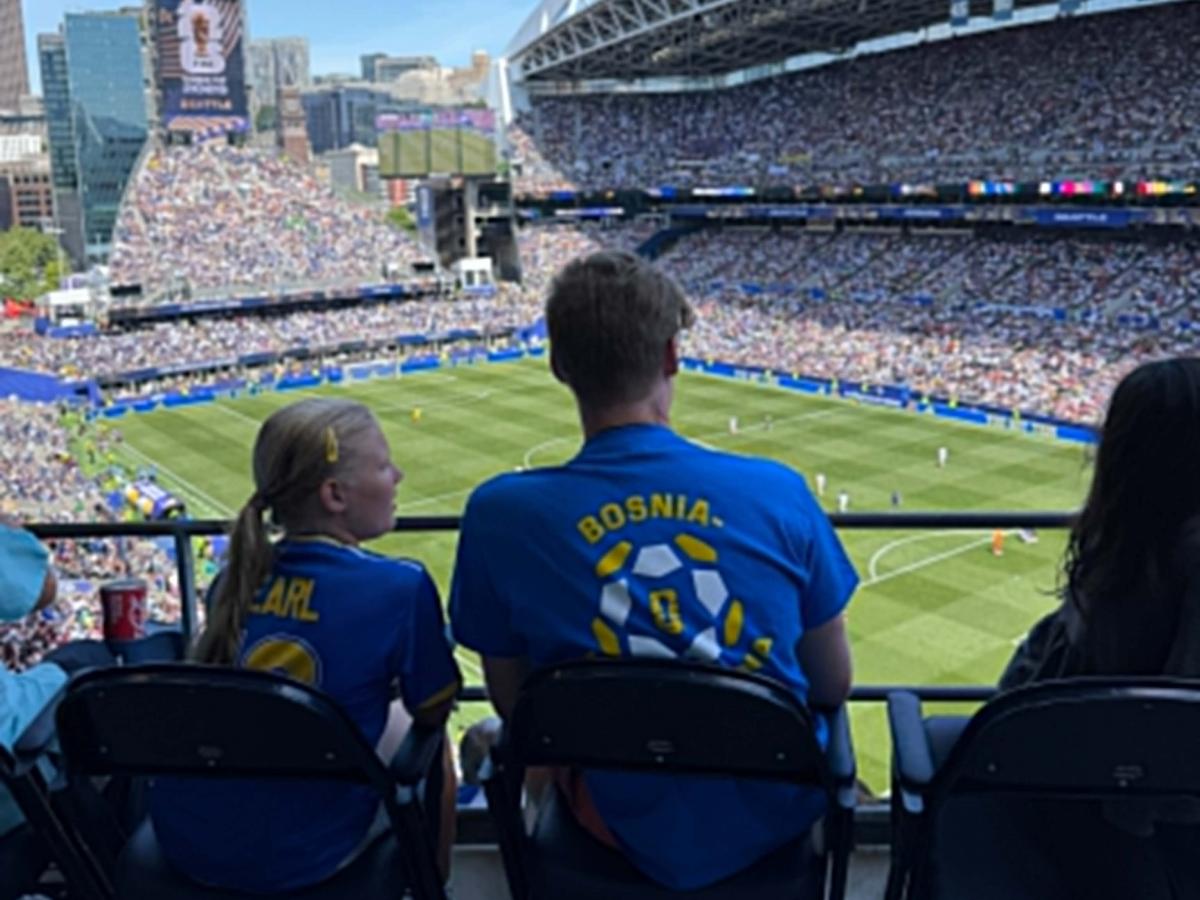
Aldijana has roused from her post-flight siesta. “There are no words to express the emotions and feelings of seeing your country’s flag in some of the world’s biggest stadiums, unfurled for the whole world to see, and a stadium filled with blue and yellow singing U ovom gradu ja nemam nikoga.
“I could not be prouder of our team, that has united one nation through the love of sport. I’m proud to come from Bosnia Herzegovina, a country filled with lilies. My children, born in the UK, a proud to call themselves Bosnian and this World Cup has allowed us to be seen by everyone for who and what we really are”.
I’m told by American friends that the dotty “take me to Bosnia” song going around bars across the country may even feature among host fans at the stadium in San Francisco. Of course, the Americans will support their team, as they should, with passion, as will we. Defying all that spoilsport crap about this being Donald Trump’s World Cup; both the American players and ours, their fans and ours, will demonstrate how football generally and the World Cup specifically are bigger than Donald Trump could ever hope to be. How football unites what he tries and fails to divide.
Yes, there’s something special about this game, as there is about this moment. In one way, it’s terribly sad that we have to meet the hosts who love us so much, and that someone has to lose. But as Džemal says, “whatever happens is a bonus”; whatever the result, we know that Bosnia’s very presence in San Francisco will be the ultimate example of football as metaphor for the best in everyone and everything. And it will be the affirmation of a momentarily united Bosnian republic by a group of inspiring young men, supported and adored by fans both in the stadium and across a community around the world that is, deservedly, now adored in return. A group of young men, their fans and their community, which have deservedly won the hearts of that world.
(In loving memory of Nedžad Sladić, my Bosnian football partner, soldier in First Korpus, pacifist, citizen of the Autonomous Republic of Džidžikovac, massive fan of all good football, with whom I worked on the article in 2014. The only person with whom one could watch the first half of a game watching Željezničar vs. Tuzla in Grbavica, then take a Samir & Emir cab to a second half watching his FK Sarajevo at Koševo on the same night. Sadly, and suddenly lost, but watching from that Elysian Sports Bar up there, on the biggest screen of all, with uncle Jakša and so very many others who should be watching too, down here mong us mortals.)
*This article was produced in collaboration with the WARM Festival and Mediacentar Sarajevo